
The Dry Eye Difference
Updated: Dec 4, 2025
It is not uncommon for patients to comment on how much testing we do at McConkey Eye Care during a Dry Eye Evaluation. Our treatment approach is to identify and treat the underlying cause. While it may seem like common sense, many offices don’t have the time, or business model, to support this approach. So, how does this translate into the patient experience? See below 👇🏻
Symptom questionnaire: your symptoms are important and help guide us.
Blur that changes with blink: tears evaporating too quickly due to low oil on the lipid layer
Symptoms worse in the morning: may not be closing eyes completely while sleeping
Itching that goes away when on vacation: allergy to something in your house or office
Excessive tearing: blockage in drainage or reflex tearing due to tear evaporation
Redness: inflammation, rosacea, bacterial, contact lens related
Lifestyle Questionnaire: How much fish do you eat? How many hours do you stare at a digital device or book? Contact lens wearer? History of LASIK? Hormone changes? It all matters. I don’t care how many hot compresses and baby shampoo scrubs you’ve done or how often you use artificial tears, none of that will “unclog” oil glands that have no oil in them due to an omega-3 deficient diet. It won’t change your contact lens overwear habits, prevent the allergy to that contact lens solution, bring back the corneal nerves damaged during surgery, or balance the hormones leading to poor tear production. Asking deep questions matter in dry eye.
Previous treatment review: I’m not here to recreate the wheel and waste your time. I want to know what drops were too expensive on your insurance plan, I want to hear which drops burned. In order for you to have success, we must work together to find a plan that not only works, but is affordable, and tolerable.
SPEED score: simply a standardized questionnaire used around the world. It helps me track your good seasons and bad, but allows me to speak to other doctors in a language that is universally accepted.
Learn your SPEED score here:
Shirmers: these tiny little pieces of paper straight out of hell that we stick on your eyes for up to five minutes: they measure tear production. Did you know that some dry eye drops are indicated for signs and symptoms of dry eye, but others for tear production? If you have low tear production, we want to know why, but also increase your tear production and keep tears on your eyes longer.


MMP-9 immunoassay: this tests for an inflammatory marker specific to dry eye in the tear film. Dry eye is, in fact, a chronic inflammatory condition. It looks like a pregnancy test, and insurances pay me less than what I pay for the test, but I do it anyways because the information is valuable for me to understand how well your dry eye is controlled.
Omega-3 testing: the top layer of the tear film is lipid, secreted by oil glands. They cannot create this layer without omega-3s. Far too often I see doctors working to increase oil in the tear film with oil based drops, hot compresses, baby shampoo, but ignore the omega levels all together. Make it make sense. You must absorb oil in your diet to excrete oil into the tear film. I always test to ensure patients are in the normal range, as too low not only impacts dry eye, but increases the risk of heart disease. This test also gives us the recommended daily dose needed to supplement to get you to a normal range.
Learn more about how Omega-3s impact dry eye here: https://omegaquant.com/omega-3-and-dry-eye/
To learn how to increase Omega-3s in your diet, click here.
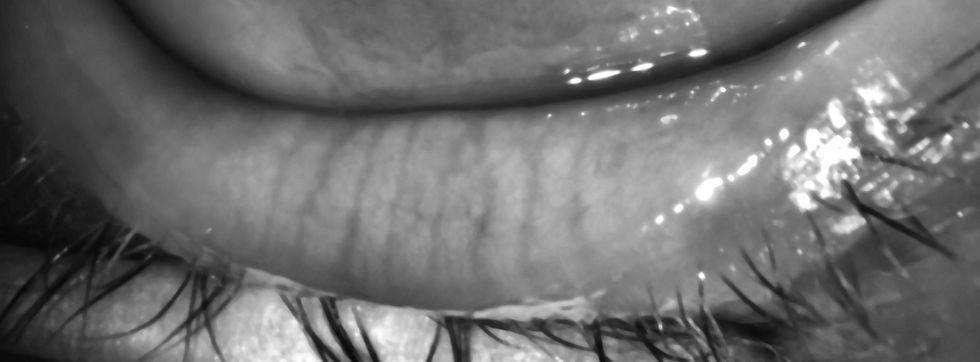
Meibography: photos of the oil glands that secrete the top layer of the tears. A staggering 86% of patients have issues with these glands, and it’s getting worse with screen time. When the glands are not used, history of accutane, or incomplete blink, rosacea, the glands die. Don’t worry, we have technology that can regenerate some sick glands.
Lash analysis: lash loss and lash dandruff can be signs of something worse: an infestation of mites called demodex. Sure, cleaning the lashes gets rid of the debris, but we really need to get rid of the cause. The sister of these mites can also live in the meibomian glands, leading to clogs.

Gland expression: we’ve looked at gland structure, but what about function? Are those glands secreting hardened white toothpaste, thick yellow goo, nice quality oil, or worse case scenario:, nothing. I video this expression for those Dr. Pimple Popper loving patients, encourage you to use them to gross out your kids and friends, but we also use the videos to look for improvement over time. Every patient asks me if their gland expression is improving, and I just don’t have the mental capacity to remember everyone’s individual gland secretions, so the videos are helpful for us all.

Blink and lid closure analysis: so, you have normal omega levels, good gland structure, and oily gland secretions? What’s the problem? Your blink. I don’t care how wonderful the structure and function of your meibomian glands are, if you don’t blink, you don’t release oil. The act of blinking puts pressure on the eyelid margins where the gland openings are located, causing the glands to squirt oil like a syringe. If you don’t blink, you don’t release oil. Without oil, the tears evaporate too quickly. And the eye dries out. We also evaluate lid closure, as not closing the eyelids completely while sleeping is more common than one make think. Don’t worry, we have the technology available to strengthen the muscle responsible for lid closure and blink!

Corneal Sensitivity testing: “But Dr. M, my eyes don’t feel dry.” These are some of the most severe dry eye cases. For whatever reason, the corneal nerves have died (LASIK, contact lens wear, diabetes, cataract surgery), the patient no longer feels their eyes are dry but get bothered by blur, glasses and contacts that don’t work, glare, redness, etc. The eye dries out, the cornea doesn’t feel it, and then no signal is sent to the brain to ask for help to heal the damaged corneal tissue. The dryness worsens, and the patient has no idea how bad things are becoming.
Fluorescein (yellow) staining: we use this dye to aid in taking eye pressure, but it also stains the nooks and crannies created on the ocular surface from dry eye when cells die. We can easily photograph the damage to monitor for progress, but it is also helpful to show patients the extent of their tissue damage (dryness), which either justifies their symptoms, or helps people without symptoms see what’s really going on.

Lissamine Green staining: this is a smaller molecule dye that gets into sick cells, unlike fluorescein which is larger and stains areas of cell loss.

Tear evaporation (TBUT): we video what your tear film looks like between blinks. How the tears cover the ocular surface and how quickly they evaporate aid in determining the underlying cause of your issues.

Imaging of cornea, conjunctiva, and lids/lashes: as discussed above, photos and videos are vital in patient education and monitoring. At times, we even use photos to prove your symptoms are not related to dry eye, but something else entirely. We want our patients to be educated on their own health, and if we are going to ask you to be compliant with a treatment plan, it’s best you know what you’re doing the things we prescribe.

I hope from this you’ve learned that there are many causes to dry eye, and there is no one size fits all treatment plan. Each patient receives personalized care and a treatment plan tailored to meet their specific needs.
Stay tuned for our blog about personalized treatment plans! For now, visit our entire blog here.
For those of you who have noticed a trend, I like to blog while I’m traveling. Today’s blog brought to you from Alaska.

Comments